Why The Carbon Monza Is A Challenge For TAG Heuer Replica Watches UK
There is something unusual about the TAG Heuer Monza. Unlike the more familiar Carrera, it has never tried to look like a conventional racing chronograph. Its cushion-shaped case, dark finish and unmistakable motorsport character give it an identity of its own. The carbon Monza Flyback takes that idea further, replacing the traditional metal case with forged carbon and bringing a more technical appearance to a design that dates back to the 1970s.
For readers exploring replica watches UK, the Monza is particularly interesting because its appearance depends on several details that are difficult to reproduce consistently. The case material, dial proportions and chronograph layout all matter. A watch can resemble the Monza in photographs without offering the same construction or mechanical functions.
That distinction is worth understanding before looking more closely at the modern carbon edition.
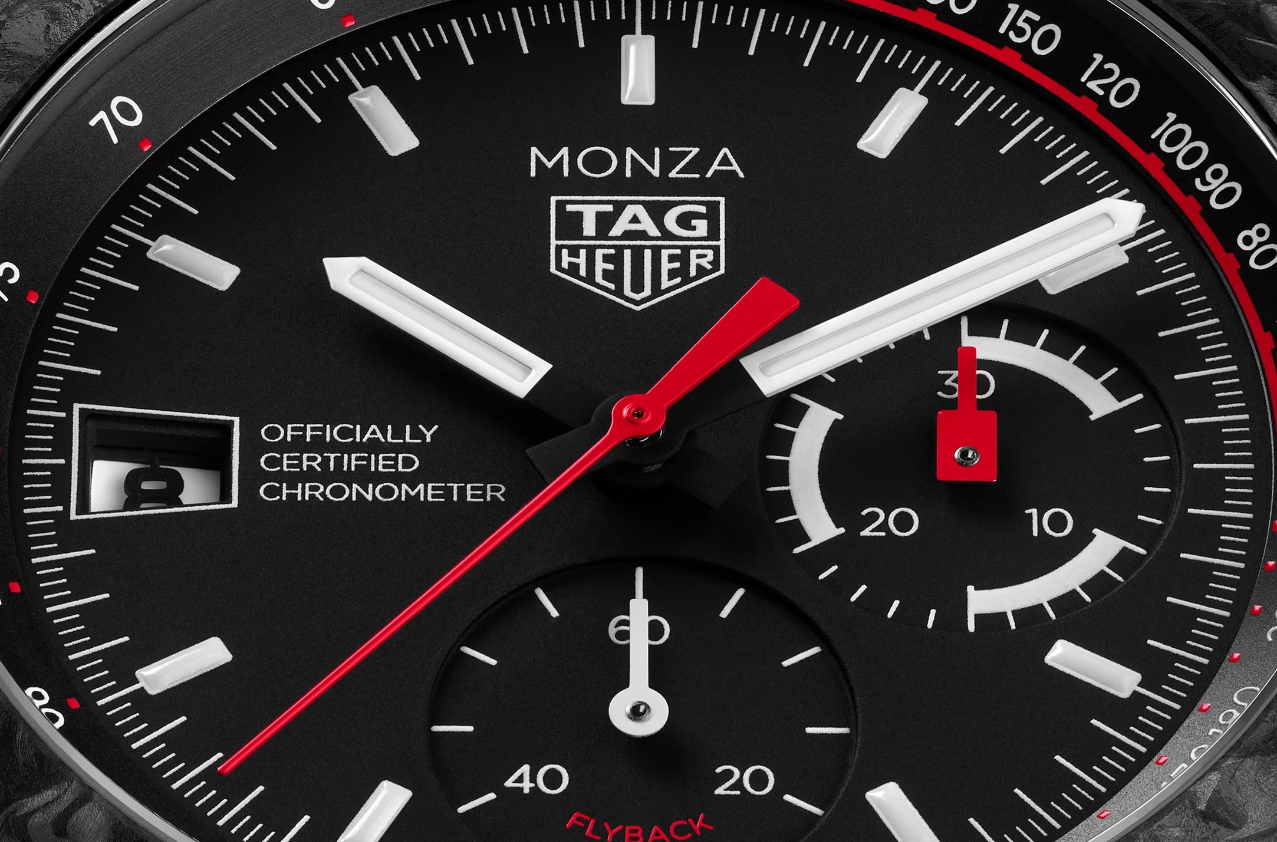
The carbon case gives the Monza its identity
The original Heuer Monza appeared in 1976, celebrating Ferrari’s Formula One achievements. Its dark case and racing-inspired styling established a design that would remain recognisable across later generations.
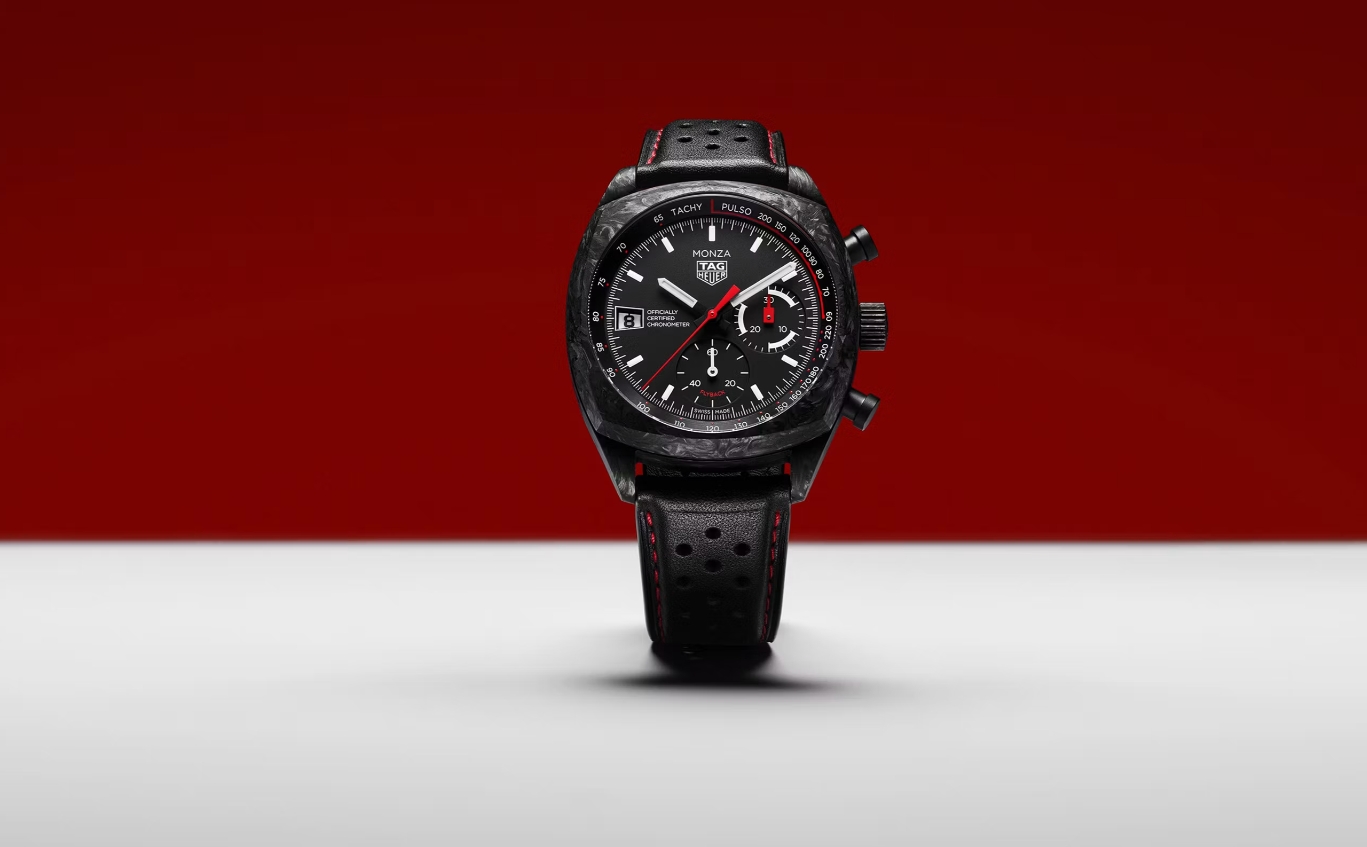
The modern Monza Flyback retains the cushion-shaped silhouette but gives it a much more contemporary appearance. Reference CR5092.FC8372 uses a 42mm forged carbon case and bezel, with a deliberately irregular surface that looks quite different from conventional brushed or polished steel.
This is where the design becomes interesting from a replica perspective. Forged carbon has a distinctive texture created by the material itself. Its appearance is not simply a decorative pattern applied to an ordinary metal case.
Anyone comparing TAG Heuer Monza Carbon replica watches UK should pay attention to how the surface changes under different lighting conditions. A uniform printed pattern may resemble carbon at first glance, but it will not necessarily have the same depth or variation as the original material.
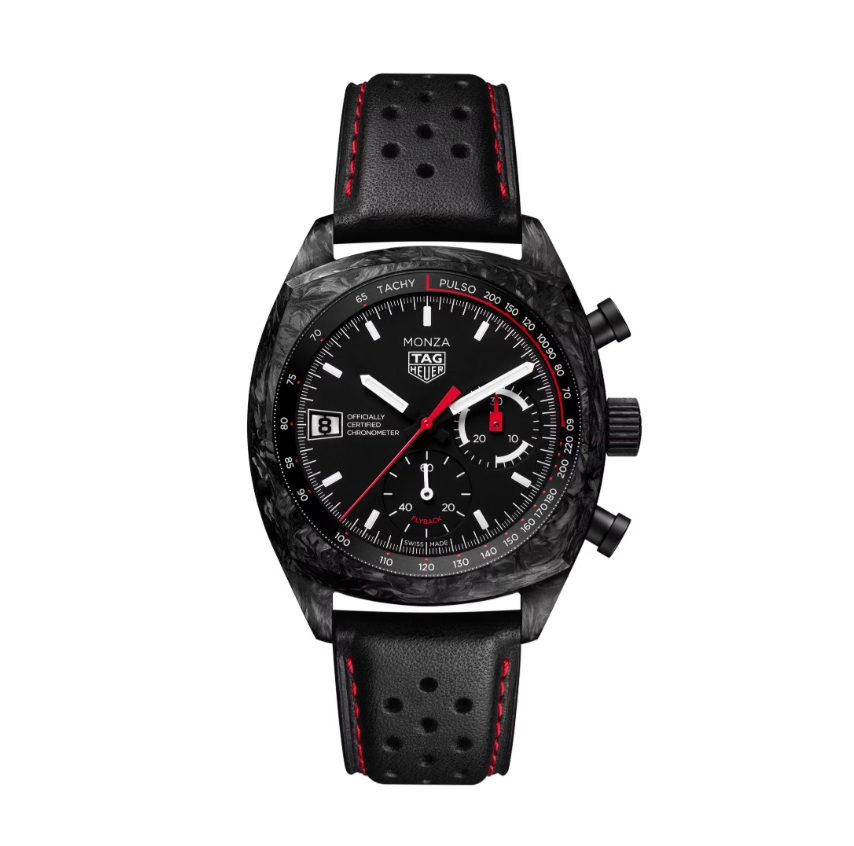
The shape of the case creates another challenge. The Monza has relatively broad shoulders, curved edges and an unusual relationship between its bezel and middle case. Small changes to these proportions can make the watch look noticeably different.
The original measures 15.22mm thick, with a lug-to-lug distance of 50.85mm. Those dimensions give the watch a substantial presence, although the curved case changes how it sits on the wrist.
Replica versions should be assessed according to their own measurements and construction. A similar diameter alone does not guarantee the same fit or appearance.
The black perforated leather strap adds another distinctive element. Its red stitching complements the dial without overwhelming the design, while the perforations reinforce the connection with classic motorsport watches.
For a design built almost entirely around dark surfaces, these small contrasts make a considerable difference.
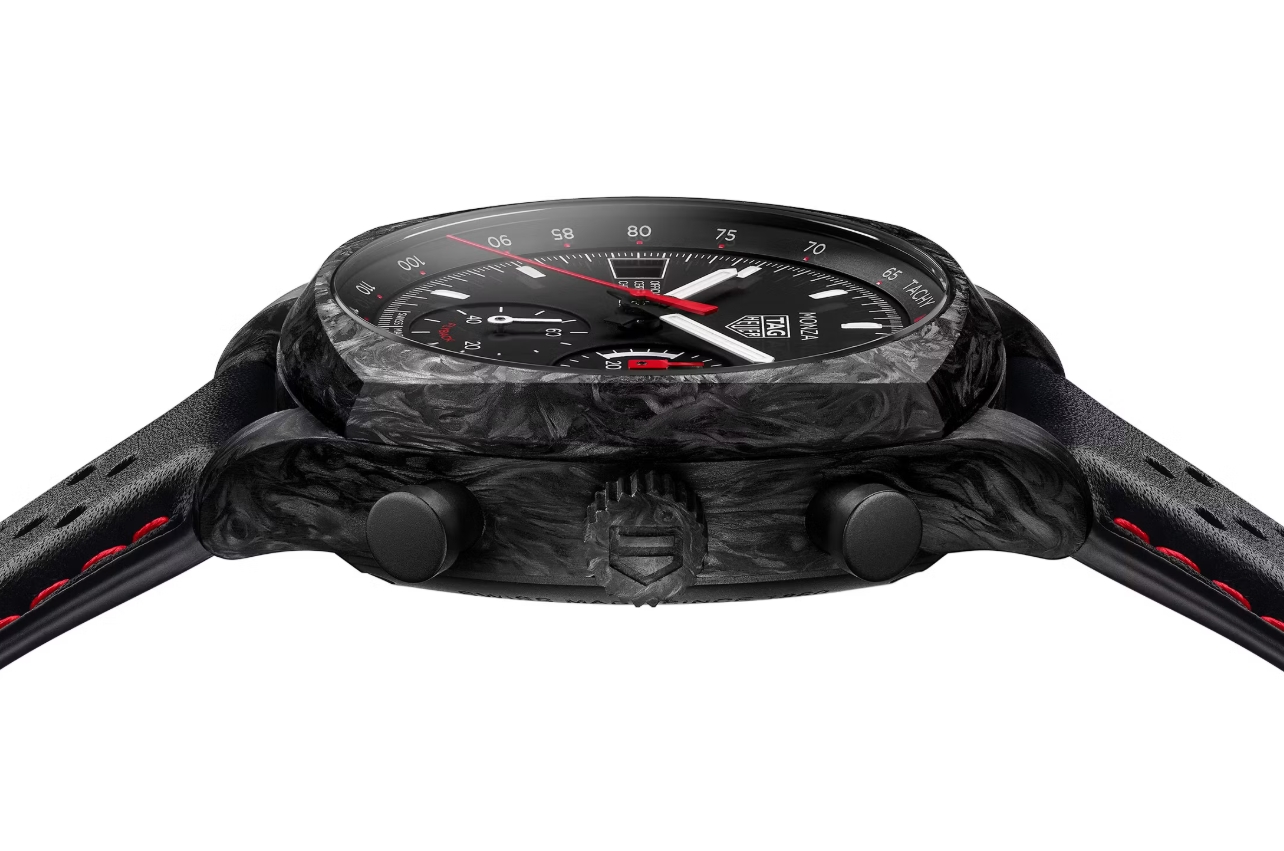
A racing dial with more detail than expected
At first glance, the Monza’s dial looks relatively simple. It is predominantly black, with two chronograph counters, white hands and carefully placed red accents. Look more closely, however, and the design becomes considerably more involved.
The outer section carries both tachymeter and pulsometer scales. These markings give the watch its instrument-like character while creating a more complicated dial layout than many conventional chronographs.
The white hands provide strong contrast against the matte black background. Red markings introduce just enough colour to connect the modern watch with its racing heritage.
The spacing of these elements is particularly important when examining TAG Heuer Monza replica dial accuracy. The relationship between the counters, outer scales and central hands can quickly reveal whether the proportions are consistent with the original design.
A dial with slightly misplaced subdials may still look attractive on its own. Placed alongside the original Monza, however, those differences become much easier to notice.
Typography is another detail worth examining. The size and placement of the TAG Heuer logo, chronograph markings and smaller inscriptions contribute to the visual balance of the watch.
None of these elements needs to dominate the dial. In fact, the Monza works because its various markings remain surprisingly well organised despite the amount of information they display.
The original also uses luminous material to make its hands and hour indications easier to read. Similar-looking markings on a replica do not automatically establish that their brightness or duration matches the original.
The modern Monza is therefore a useful example of how black and red racing chronograph design depends on proportion rather than colour alone.
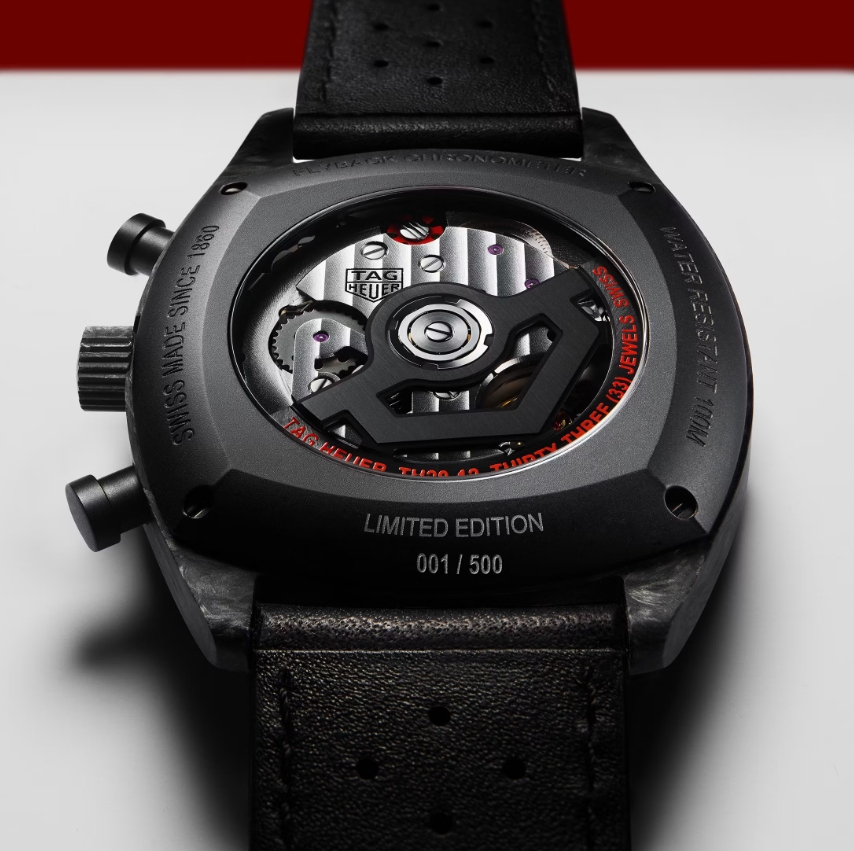
The flyback movement is where appearance and mechanics separate
The original carbon Monza is powered by TAG Heuer’s automatic Calibre TH20-12. This COSC-certified movement has an 80-hour power reserve and operates at a frequency of 28,800 vibrations per hour.
Its most important feature is the flyback chronograph.
With a conventional chronograph, the wearer normally stops the timing function, resets the hands and starts the mechanism again before measuring another interval. A flyback chronograph allows the running chronograph to be reset and restarted with a single operation.
It is an appropriate complication for a watch with such a strong connection to motorsport, where consecutive timing intervals are especially relevant.
For anyone interested in TAG Heuer Monza Flyback replica movement differences, however, the distinction between appearance and function is essential.
A replica may reproduce the original dial arrangement while using a conventional chronograph movement. The counters might look similar, but that does not establish that the mechanism has a genuine flyback function.
Likewise, the original watch’s COSC certification, power reserve and movement specifications should not be attributed to an alternative version without independent evidence.
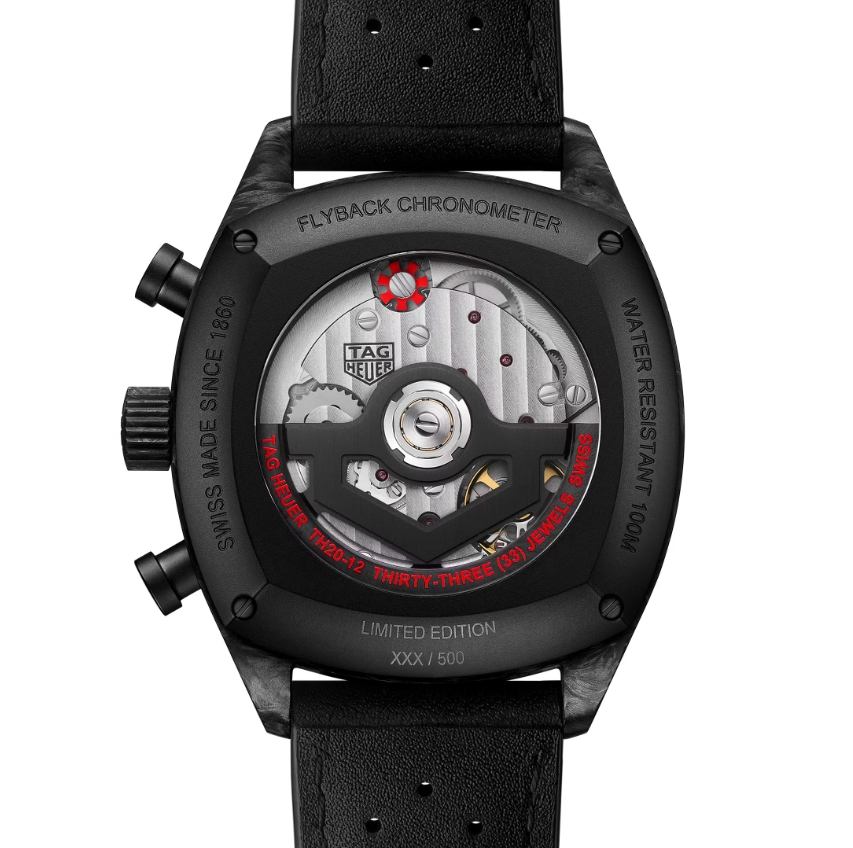
The caseback provides another useful comparison point. On the original carbon Monza, its dark metal construction surrounds the movement display, giving the rear of the watch a distinctive technical appearance.
When comparing similar designs, the shape of the caseback, rotor appearance, movement layout and surrounding markings can all influence visual similarity. Decorative similarities should not be confused with identical mechanical construction.
The original carbon Monza was produced as a limited edition of 500 pieces. That production figure belongs to the authentic TAG Heuer reference and does not establish the quantity, exclusivity or authenticity of any replica watch.
It is this combination of distinctive materials, unusual proportions and sophisticated mechanics that makes the Monza an interesting subject for replica watch coverage.
Many sports chronographs can achieve a broadly similar appearance by combining a round steel case with a black dial. The Monza requires much closer attention to its unusual silhouette and the texture of its carbon surfaces.
Readers researching replica TAG Heuer watches UK can compare this design with the Carrera, Monaco and Aquaracer to see how differently each collection approaches case construction and dial layout.
The Carrera generally uses more conventional chronograph proportions. The Monaco is immediately recognisable because of its square case. The Monza occupies a different position, combining vintage-inspired racing details with contemporary carbon construction.
For that reason, forged carbon TAG Heuer replica case details deserve particular attention. Material texture, dimensions, dial spacing and movement functionality should be considered separately rather than treated as a single measure of quality.
The carbon Monza remains an interesting example of how a historic watch design can evolve without losing its original character. Its black cushion-shaped case and racing details are instantly recognisable, but much of its appeal lies in elements that photographs alone cannot fully communicate.
For UK replica watch readers, that is the central lesson. Reproducing a familiar outline is one thing. Recreating the materials, proportions and mechanical behaviour that define the original watch is something quite different.
Editorial note: The specifications discussed in this article refer to the original TAG Heuer Monza Flyback Chronograph. Replica watches may use different materials, movements and manufacturing processes. The photographs accompanying this article show the original watch unless otherwise stated.